Mattress construction and feel
How to Compare Vispring Luxury Mattresses by Feel and Construction
A mattress is not a firmness number, though firmness numbers have the useful virtue of fitting on a label. To compare Vispring luxury mattresses thoughtfully, look beyond that shorthand: consider what lies inside, how the layers work together, how the bed responds under your body, and whether the whole arrangement suits your frame, habits and preferred way of sleeping.
Begin with the experience, not the label
Mattress shopping encourages a kind of numerical certainty. One model is called soft, another medium, a third firm, as though comfort could be settled by a single word printed beside a price. In practice, firmness is only one part of the sensation. A mattress may feel supportive without feeling hard; it may yield gently at the shoulders while holding the lower back more steadily. The same mattress can also seem quite different to two people, or to one person on different foundations.
When comparing Vispring luxury mattresses, begin by describing what you want to feel. Do you prefer a surface that welcomes the body with a little give, or one that feels more level and resistant? Do you want to sink into the upper layers, or to feel buoyant and readily supported near the surface? These are more useful questions than asking which model is “best,” because the answer depends on the sleeper as much as on the mattress.
Try to distinguish the initial impression from the support that becomes apparent after several minutes. A plush top can feel inviting when you first lie down, while the deeper construction may provide a different kind of resistance. Conversely, a mattress that feels firm at first contact may ease pressure more effectively once the body has settled. A brief shop test is informative, but it is not a complete simulation of a night’s sleep.
Position matters, too. Side sleepers often notice pressure around the shoulder and hip; back sleepers may pay closer attention to whether the waist and pelvis feel evenly supported. Stomach sleepers may prefer a more level surface that helps prevent the middle of the body from sinking excessively. These are starting points rather than rules. Body shape, weight distribution, mobility and personal preference all influence what feels comfortable.
Read construction as a system
Mattress construction is not a list of ingredients whose names alone predict comfort. The important question is how the components are arranged and how they respond together. A luxury mattress may combine a supportive core with one or more comfort layers, upholstery materials and a cover. Each layer contributes to the overall feel, but no single material tells the whole story.
The support core carries much of the structural work. In an innerspring design, steel coils flex under load and help return the mattress toward its original shape. Coil arrangement, gauge, count and configuration can affect responsiveness, stability and the distribution of support. Those details are most useful when understood in context: a coil specification by itself does not tell you exactly how a finished mattress will feel.
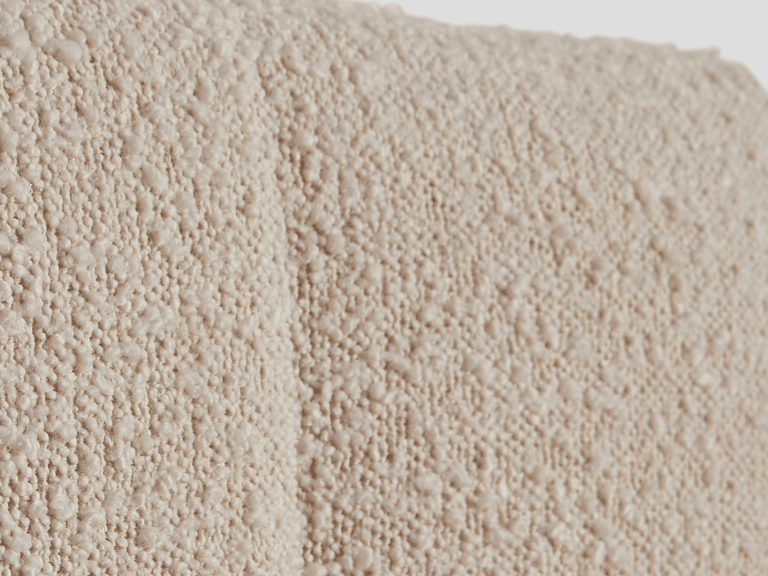
Above the core, comfort layers influence how readily the mattress accommodates the body. Natural fibres, padding, foams and other upholstery materials can alter the surface feel, temperature experience and speed of response. Some materials compress and rebound quickly; others may give a more cushioned or slowly yielding sensation. Layer thickness and placement matter as much as the material name. A thin layer over a responsive core will not feel the same as a deep, soft comfort package built over that core.
It is also worth asking how the mattress is constructed for use over time. A model designed to be turned or rotated may have different care requirements from one with a designated top side. Tufting, quilting and the way layers are held together can be relevant to the mattress’s structure and upkeep. Rather than assuming that a particular technique guarantees a particular result, check the manufacturer’s description and care instructions for the exact model under consideration.
Product ranges and specifications can change. Confirm current details directly with the maker or authorised retailer, and compare like with like: exact model name, size, construction, comfort description and any available options. Similar names or shared design language do not necessarily mean two mattresses have the same internal build.
What materials can tell you—and what they cannot
Materials are a useful part of the comparison, but they are not a shortcut to a verdict. Natural fibres, for example, are often selected for their particular texture, resilience or moisture-handling characteristics. Different fibres behave differently, and their effect depends on how much is used, where it sits in the mattress, and what surrounds it. A materials list gives you a map of the interior, not a guarantee of the feeling under your shoulder.
Consider whether the description separates the support core from the upholstery and comfort layers. If it does not, ask for clarification. “Natural materials” is a broad phrase; it does not specify how the mattress is built, how thick its layers are, or how the finished surface responds. Likewise, “pocket spring” or “innerspring” describes a component category rather than the entire sleep experience.
Temperature is another area where construction deserves a close look. Mattress warmth can be influenced by the cover, the upholstery layers, bedroom conditions, bedding and the sleeper. Breathability claims should be treated as one consideration among several, not as a promise that a mattress will feel cool in every room or season. If you tend to sleep warm, notice both the surface sensation and how the bed feels after you have been lying on it for a while.
For shoppers who value material transparency, ask for a clear account of what is present and where. You may also wish to learn about certifications or sourcing statements, where applicable. Such information can help you assess priorities, but it should be checked against the exact product and current documentation rather than inferred from a brand’s general reputation.
Translate firmness into body support
Firmness describes a subjective surface impression; support concerns how the mattress holds the body in a comfortable position. The two are related, but they are not interchangeable. A soft-feeling mattress can still offer substantial underlying support, while a firm surface can feel uncomfortable if it does not accommodate the sleeper’s shape or preferred position.
As you test a mattress, notice whether pressure becomes concentrated at particular points. Side sleepers can pay attention to the shoulder and hip, while back sleepers may notice whether the lower back feels suspended or pressed. Try to relax rather than brace against the surface. If you find yourself continually shifting to escape pressure, that is useful information, though a short test cannot predict every aspect of long-term comfort.
It can help to test in your usual sleep position for several minutes, then briefly compare another position. If you share the bed, both sleepers should try the mattress if possible. Differences in body size, sleep posture and comfort preference may make a single shared firmness label less meaningful than it first appears. In some arrangements, separate sides or configurations may be worth discussing with a knowledgeable retailer, if available for the model.
Do not treat a firmness scale as an industry-wide measurement. One maker’s “medium” may not feel precisely like another maker’s “medium,” and even mattresses within a range may respond differently because their construction differs. The label is best used to narrow a field, then tested against the feel and support you actually experience.
Make a fair comparison in person
A showroom can be a distracting place: bright lighting, conversations, labels, and the mild absurdity of lying down in public while pretending to be asleep. A simple routine can make the exercise more useful. Wear comfortable clothing, remove bulky outerwear and spend enough time on each mattress to notice more than the first impression.
- Confirm the model. Write down the exact name and size, along with the stated firmness or feel description.
- Use your usual position. Lie as you normally sleep rather than adopting a pose that feels impressive but unfamiliar.
- Notice pressure and alignment. Pay attention to shoulders, hips, lower back and whether the surface encourages you to relax.
- Compare transitions. Turn from side to back or back to side and notice how readily the mattress responds to movement.
- Ask about the build. Request specific information on materials, support construction, upholstery and care.
- Repeat the test. Return to a promising mattress after trying another. First impressions can be altered by contrast.
If you are comparing several Vispring luxury mattresses, take brief notes immediately. Record not only “soft” or “firm,” but also “gently yielding at the shoulder,” “more buoyant when turning,” or “felt level on my back.” Descriptions of sensation are imperfect, but they are more revealing than a row of scores without context.
Ask how the showroom model is set up. The foundation beneath a mattress can affect its feel, so a comparison made on different bases may not be entirely fair. Where possible, test mattresses on similar, suitable foundations and find out whether the display model has been used for a long time. These details do not invalidate a test; they help you interpret it.
The bed frame is part of the equation
A mattress does not work in isolation. Its foundation or bed frame may affect support, stability and the way the finished bed feels. Before choosing a mattress, confirm that the intended base is suitable and that its dimensions match the mattress. Follow the mattress maker’s guidance on slats, foundations, centre supports and any other requirements.
Slatted frames deserve particular attention. The spacing, width and condition of slats may matter, as can the frame’s central support, especially on wider sizes. A mattress placed on a base that is incompatible or poorly supported may not perform as intended. If you already own a bed, measure it and inspect its structure before ordering; do not rely on the size name alone.
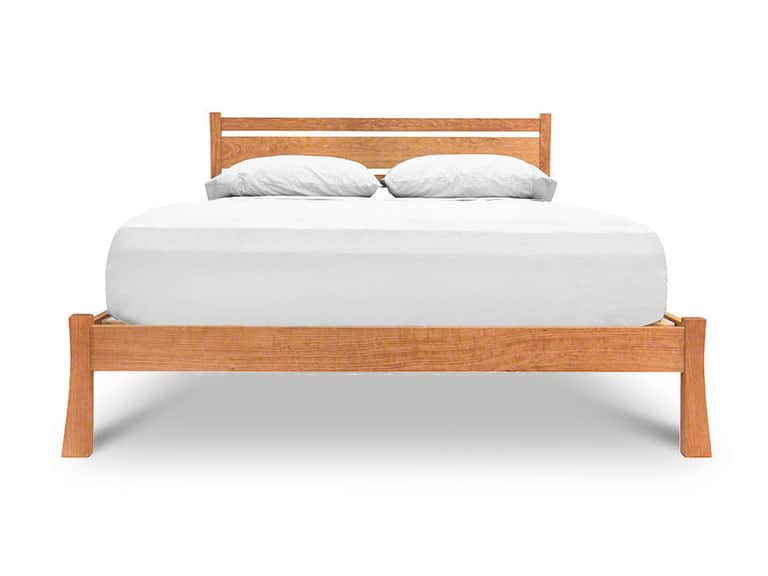
Platform beds can offer a clean, low-profile setting, while traditional frames may have different support arrangements. Adjustable bases require a separate compatibility check: not every mattress is designed for articulation, and a mattress intended for a fixed base may not be suitable for repeated bending. Confirm both the mattress manufacturer’s instructions and the base specifications before combining them.
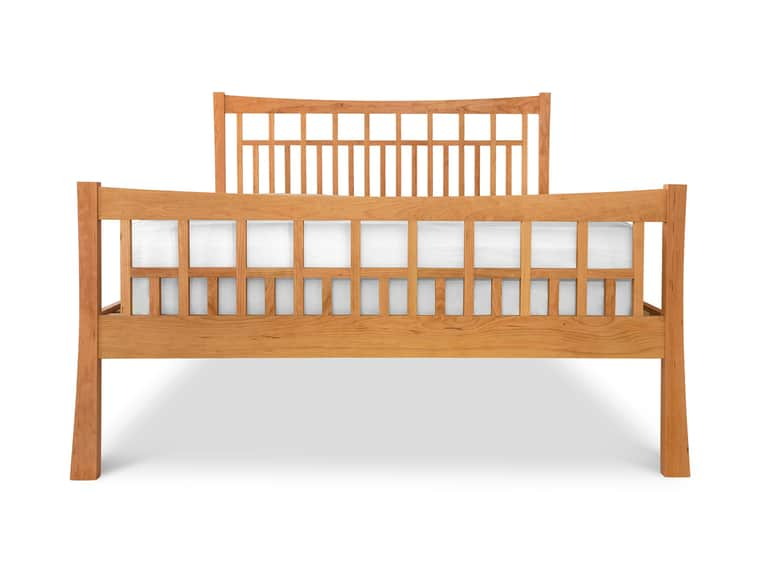
Frame height also changes the practical experience of getting in and out of bed. Add together the frame, foundation and mattress heights to estimate the finished level. This is particularly useful if the mattress is substantial, if the bed has a high headboard or footboard, or if bedroom furniture sits close to the frame. A visually handsome bed can become awkward when its total height is overlooked.
Compare size, care and the details that follow you home
Dimensions are simple to overlook when attention is fixed on comfort. Verify the mattress’s stated width and length, especially if the bed frame is older, custom-built or described with a regional size name. Allow for bedding and room clearance as well as the frame itself. The right mattress should fit securely without being forced into a space for which it was not designed.
Care instructions matter because they shape the ordinary life of the mattress. Find out whether the model should be rotated, turned, or left in a fixed orientation, and how often any recommended movement should take place. Ask about suitable cleaning methods and what to do after a spill. Avoid applying generic advice if it conflicts with the maker’s instructions: upholstery and internal construction can vary.
Clarify delivery, installation and access before committing. A mattress must pass through hallways, stairwells and doorways, and a large, heavy model may require planning. Ask about the delivery arrangements, any removal service, lead times and what is included. These are not glamorous details, but they are part of choosing a bed sensibly.
Warranty terms and trial or return conditions also deserve careful reading. Check what is covered, what maintenance is expected, how a claim is assessed, and whether the terms apply to the exact mattress and foundation combination. Policies vary, so keep the relevant documents and avoid relying on assumptions based on a different model or retailer.
A practical comparison checklist
When two mattresses seem close, put their details side by side. A short comparison can reveal whether the difference is meaningful or merely a difference in description.
- Exact model and size: Are you comparing the same size and current version?
- Feel description: What does the maker say, and how does that compare with your own test?
- Construction: What supports the body, and what forms the comfort layers?
- Materials: Are the materials and their locations described clearly?
- Sleep position: How does the mattress feel in the position you use most?
- Movement: Does it respond comfortably when you turn or get in and out?
- Foundation compatibility: Is your frame or base approved for the mattress?
- Care: Does the routine suit your household and willingness to maintain it?
- Practical terms: Have you checked dimensions, delivery, warranty and return conditions?
This checklist is not a scoring machine. Its purpose is to keep the comparison grounded in the things that will matter at home. If one mattress feels better in the showroom but requires a foundation you do not have, the overall decision may look different. If two models feel similar, the clearer construction details or more suitable care requirements may become decisive.
Common comparison mistakes
The most familiar mistake is choosing by firmness label alone. The next is choosing by materials list alone, as though a named fibre could settle the question of comfort. Both shortcuts leave out the complete construction and the person lying on it.
Another mistake is treating a showroom test as a final answer. A few minutes can reveal pressure, ease of movement and first impressions, but it cannot reproduce a month of changing positions, varying bedding and ordinary nights. Use the test as evidence, not prophecy. Ask about the retailer’s policies so you understand what options exist after delivery.
It is also easy to compare mattresses on different foundations, with different pillows, or in different positions, then attribute every contrast to the mattress itself. Keep the conditions as consistent as you can. If you use a particular pillow at home, consider how pillow height interacts with mattress feel, especially when sleeping on your side.
Finally, do not assume that the most elaborate description means the most suitable bed. Construction details are valuable because they explain what a mattress is made to do, not because complexity automatically produces comfort. A calm, clear match between the mattress, sleeper and frame is more useful than a long list of features that do not address your needs.
Choosing with patience
Comparing Vispring luxury mattresses is an exercise in connecting material facts with bodily experience. Start with your preferred sleeping positions and the sensations you value. Examine the support core, comfort layers and upholstery as a complete system. Test models consistently, ask specific questions, and check how the mattress will work with the frame and foundation you intend to use.
There is no universal firmness that suits every sleeper, and no ingredient list that can replace a careful assessment. The best comparison is not the one that yields the most confident-sounding answer in the shortest time. It is the one that leaves you understanding why one mattress seems more comfortable, what its construction is intended to provide, and whether its practical requirements fit the bedroom where it will live.
A bed is a quiet piece of architecture: frame below, layers above, body at rest between them. When those parts are considered together, the choice becomes less mysterious. The label still has its place. It simply no longer has to do all the talking.